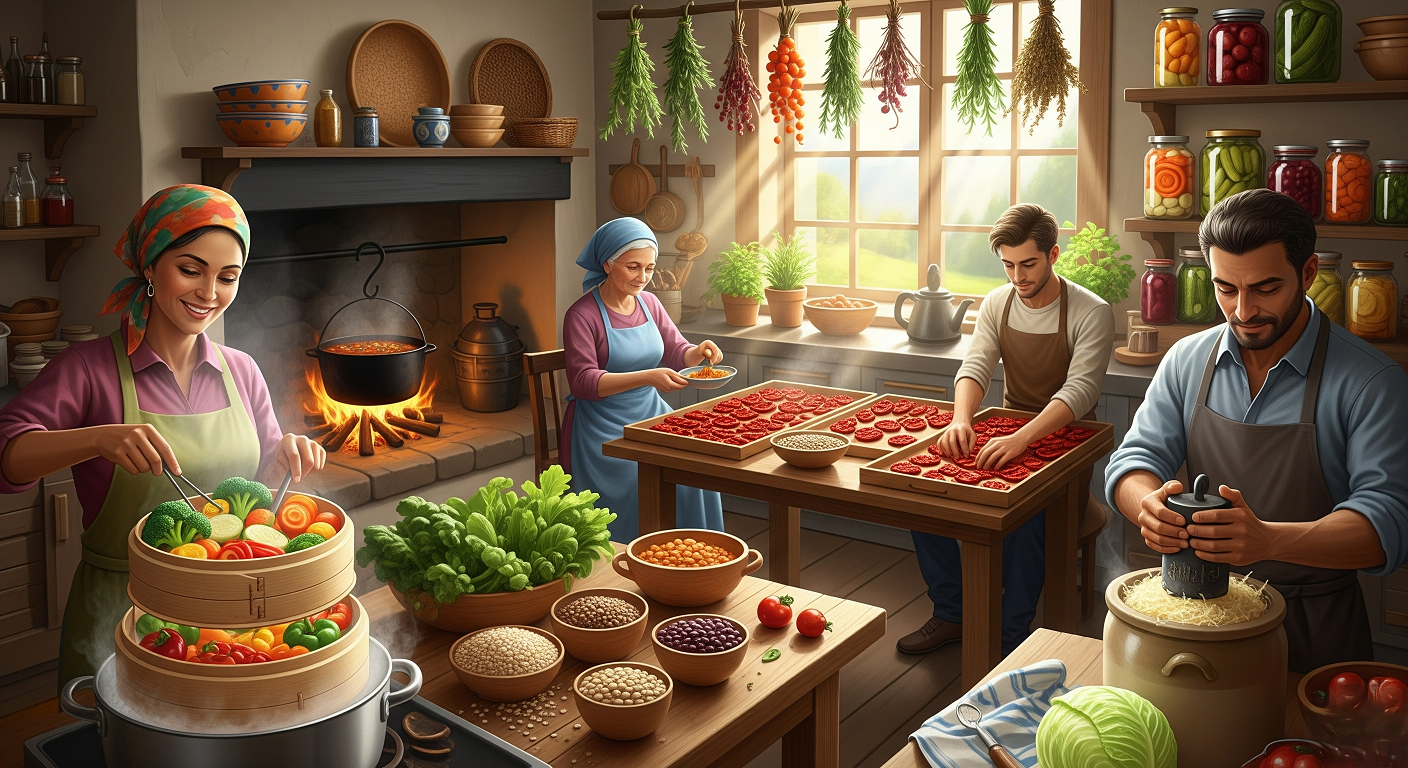
In the rush for quick meals, we’ve left behind the very techniques that made food flavorful, nutrient-rich, and healing. Traditional cooking isn’t just nostalgic—it’s scientifically smart. From clay pots to open fires, our ancestors mastered the art of preserving nutrients without knowing modern nutrition charts. Today, we explore five time-tested cooking methods that not only protect the health value of your meals but also reconnect you with the rhythm of real food.
1. Clay Pot Cooking
“Cooked slow, nourished deep — with minerals intact.”


Clay pot cooking is one of the oldest and most natural forms of food preparation. Clay’s porous structure allows slow evaporation of steam, creating a moist environment that cooks food gently and evenly. This method is especially effective for nutrient preservation because:
- Water-soluble vitamins (like Vitamin B-complex and C) are retained due to low, consistent heat.
- Clay’s alkaline properties interact with acidity in foods (like tomatoes and yogurt), balancing pH and improving digestion.
- Cooking in unglazed clay infuses trace minerals like calcium, iron, magnesium, and phosphorus directly into food.
🍽 Best for:
-
Chicken curry, lentils (daal), rice, vegetable stews, biryani
💡 Health Tip:
Always soak unglazed clay pots before cooking to prevent cracking and allow natural seasoning of the pot. Over time, it enhances flavor just like cast iron.
2. Open Flame & Wood Fire Cooking
“From fire to flavor—slow-roasted nutrition at its best.”

Cooking on an open flame or wood fire stove allows food to absorb natural smokiness without needing artificial flavor enhancers. This method produces higher heat over longer durations, which preserves and enhances:
- Iron, zinc, and calcium from bone-in meats and lentils.
- Antioxidants in vegetables like tomatoes, onions, and peppers become more bioavailable (e.g., lycopene in tomatoes increases after roasting).
- The Maillard reaction (natural browning) develops deeper flavor and preserves amino acids when done correctly.
Unlike fast cooking in a microwave or induction stove, wood fire allows ingredients to release nutrients gradually, without shocking them at high temperatures.
🍽 Best for:
-
Tandoori chicken, kebabs, roasted eggplants, grilled tomatoes, homemade raita over fire-roasted coals
💡 Health Tip:
Use hardwood (like kikar or mango wood) for clean smoke and better mineral preservation. Avoid chemically treated wood or plastic-covered kindling.
3. Slow Cooking Over Low Heat
“Time is the secret ingredient that modern kitchens forgot.”
Slow cooking preserves nutrients by avoiding sudden temperature spikes that degrade vitamins, proteins, and minerals. When meals are simmered for hours, especially in covered clay or heavy-bottom pots, you get:
- Maximum collagen and gelatin extraction from meat bones, which support joint health and gut lining.
- Greater flavor infusion from spices, garlic, ginger, and onions—without artificial thickeners or flavor powders.
- Preservation of heat-sensitive phytonutrients, like curcumin in turmeric and allicin in garlic.
This method is excellent for people seeking anti-inflammatory meals, heart-healthy dishes, and weight management plans due to low oil requirements.
🍽 Best for:
-
Nihari, chicken stew, haleem, slow-cooked yakhni, lentil soups
💡 Health Tip:
Avoid aluminum or nonstick pots for long cooking durations. Choose clay, cast iron, or stainless steel for better flavor and mineral safety.
4. Fermentation & Natural Marination
“Let the food prepare itself—before it even hits the stove.”


Fermentation is a powerful traditional method used in desi households through yogurt, pickles, and batters. It boosts the digestibility and nutritional value of meals by:
- Creating beneficial enzymes and probiotics that support gut health.
- Breaking down proteins into easier-to-absorb amino acids.
- Improving iron, folate, and vitamin B12 absorption especially in plant-based meals.
Natural marination—especially with yogurt, lemon, or vinegar—makes meat more tender, preserves essential fats, and enhances mineral availability.
🍽 Best for:
-
Chicken handi, tandoori chicken, dosa batter, sour lentil pancakes, yogurt-based kebabs
💡 Health Tip:
Always marinate meat for at least 4 hours, and use full-fat yogurt to help carry fat-soluble vitamins like A, D, E, and K into the dish.
5. Hand Grinding & Stone Tools (Sil Batta)
“Flavor that machines miss, nutrition that heat destroys.”

Traditional hand grinding on sil batta or mortar & pestle doesn’t heat up the food like blenders and grinders do. This method:
- Preserves essential oils in spices and seeds, which carry natural anti-inflammatory compounds.
- Reduces oxidation of garlic, herbs, and nuts, making them more potent and longer lasting.
- Retains flavor complexity and texture, especially in chutneys, garlic pastes, and masalas.
Electric blades often heat ingredients and destroy volatile nutrients like vitamin C and sulfur compounds—critical for immunity and gut health.
🍽 Best for:
-
Green chutney, garlic-ginger paste, roasted cumin paste, raw tamarind sauces
💡 Health Tip:
Grind in small batches, use fresh ingredients, and avoid over-pounding to retain moisture and nutritional potency.
🌿 Final Thoughts: Bring Back the Kitchen Wisdom

The wisdom of traditional cooking methods is more relevant today than ever. In a world obsessed with fast food and ultra-processing, these ancient practices are your best bet for:
- Nutrient retention
- Deeper flavors
- Improved digestion
- Long-term health and immunity
At Nutric Food Show, we’re on a mission to make you fall in love with slow, soulful, nutrient-rich food again.
📌 Bonus: How to Start Small
Want to ease back into traditional cooking?

✔️ Swap your aluminum pan for a clay pot this weekend.
✔️ Try marinating your chicken in yogurt before grilling.
✔️ Prepare your chutney on a mortar and pestle once a week.
✔️ Simmer your daal slowly instead of pressure cooking.
Your health—and your taste buds—will thank you.
- Kickstart 2026 with These 7 Healthy Pakistani-Inspired Habits for a Stronger, Happier New Year
-

-

-

-

-

-